 Maylee at Beyond Gumbo
Wouldn’t it be great to have a plantain tree (or banana tree) right outside your front door? Just walk outside and pick this ingredient for breakfast. Recently, our grocery delivery service brought us plantains rather than bananas. In my quest to figure out how to cook this starchy vegetable, I asked our Liberian friend, Judy, if she had ever used plantains. Why yes, she stated that plantains grow prolifically in Liberia and are a regular part of the meals of her extended family there. To my delight, Judy came over to our home one day and showed how she cooked plantains. Her process is so simple — basically peel, slice and deep fat fry the plantains. Judy serves plantains with other meats, such as fried chicken, or uses the fried slices in other dishes such as rice, cabbage and vegetables. Her plantains were crisp on the outside and soft on the inside. Plus, these plantains were sweet — I felt as if I was eating candied plantains. Delicious!

We are so lucky to have our Liberian friends living close by. And, we are lucky that their family loves to cook. On many occasions, we have enjoyed special events with a buffet of Liberian foods. Judy learned how to cook traditional Liberian foods from her mother and she is passing the skill along to her children. No recipes here, just jump in an help with the cooking and clean up duties. Liberian cuisine uses plenty of spices and “stews” which are mixtures of vegetables with meat, whole fish (with bones) or chicken mixed in with greens, vegetables and spices. Liberian food is spicy and hot! it is interesting that Judy’s Liberian food is beginning to get Cajun touches!
Making Fried Plantains
Apparently, I have been “over-thinking” how to cook plantains. Judy’s process is so simple. It involves just a couple of steps. And, although plantains look like a banana — they are not eaten raw. Just fry plantain slices like french fries. How easy is that! Here we go.
First, acquire plantains….This may be the most difficult step. Judy goes to a neighborhood Mexican grocery store. There are several of these stores close by in Baton Rouge — as we have a signifiant Hispanic population. There is also an African grocery store close by. Judy warns against picking up plantains at large retail grocery stores such as Albertsons. Those plantains are probably imported from Central America. They are picked too green and won’t ripen properly to make the wonderful sweet slices which we had today.
Years ago, plantains were originally a food of Southeast Asia. Then they travelled to West and Central Africa. African slave traders brought plantains to the Caribbean region and Latin America. So, plantains have been in Latin America for 300 – 400 years. This makes plantains an historic staple in the diets of people all around the world.

Judy used 3 ripe plantains for our meal of six folks — and we had plenty of slices left over. Judy purchased plantains which were ripe (yellow plantains), shown above. She also picked up this very ripe and softer plantain (black). The black plantain became mushy with cooking. and soaks up too much oil — it is not recommended to use this one.
To get the plantains ready, Judy slit the plantains lengthwise with a knife and removed the peel.

Then she sliced the plantains on the diagonal — about 1/4″ to 1/2″ thick.

To cook the plantains, the slices were deep-fat fried (without adding any breading flour). We partially filled a small heavy pot with peanut oil. After the oil heated, a test slice sizzled. We fried the slices for two minutes on the first side. Then we flipped each slice and fried until the slices were beginning to turn brown on the edges and were soft. (I keep peanut oil on hand just for for deep fat frying — since it has a high temperature threshold and a great flavor.)


We drained the slices on paper towel-lined plates and then transferred to a serving platter.

Typically, plantain slices are served with other dishes and mixed into recipes. For example, Judy says that you can substitute plantains for potatoes in recipes. I’ll have to work on that idea. Since plantains are a staple in the diet of Liberians, it is no wonder that this vegetable has lots of uses.

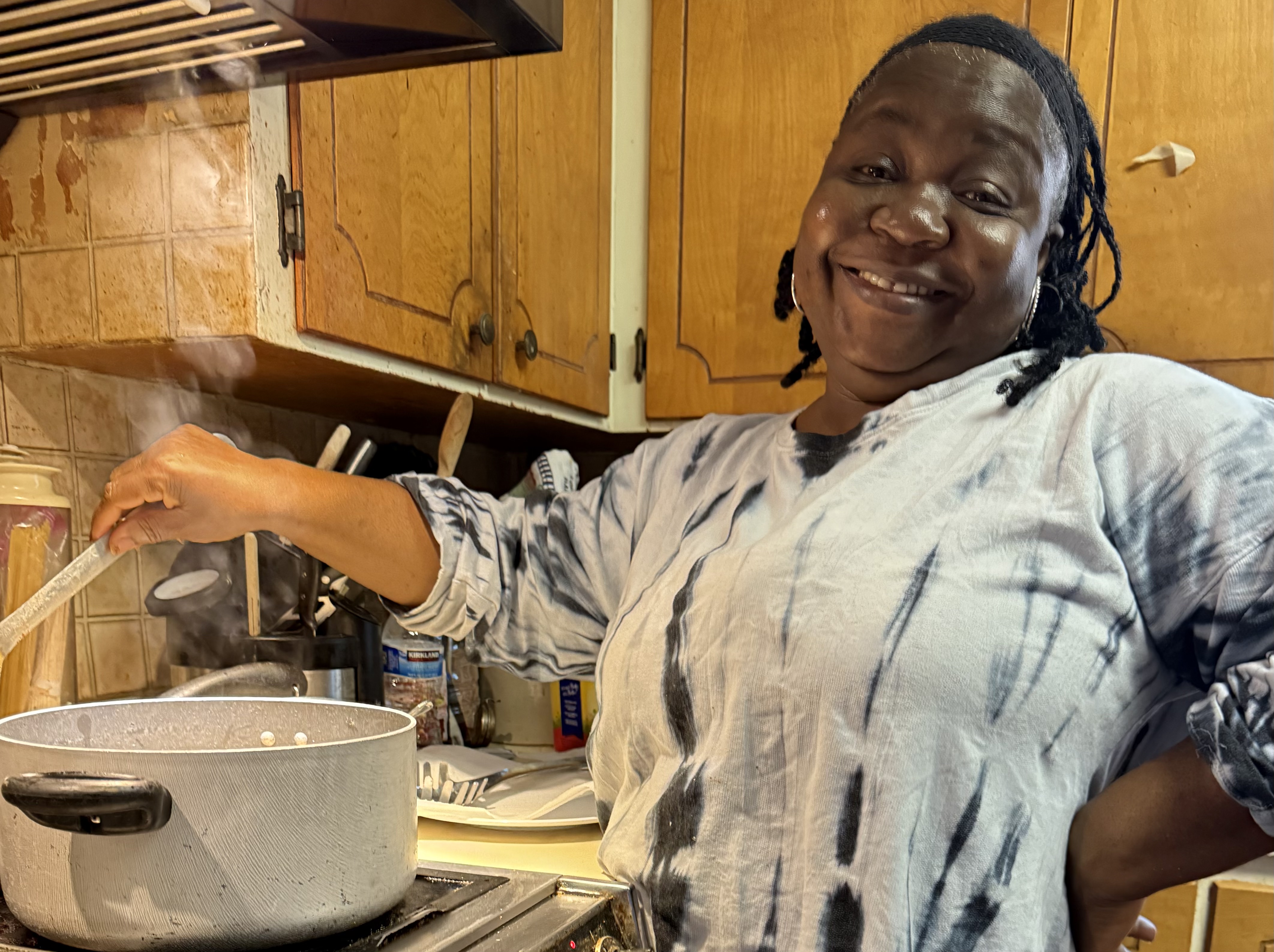
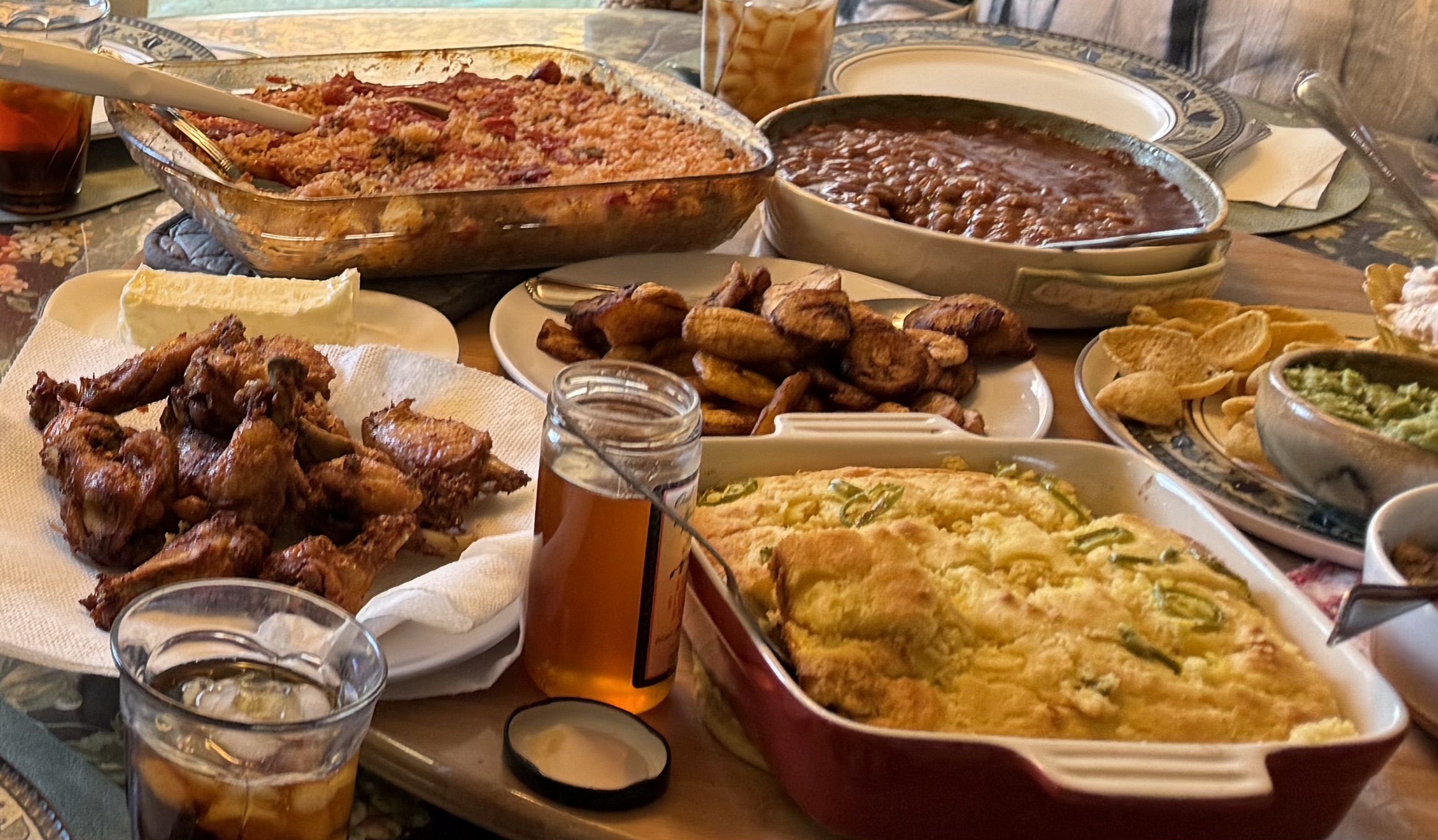
On that afternoon, Judy brought over several foods to cook. I loved her Spicy Fried Chicken Wings as well as the Fried Plantains and Fried Cabbage with Shrimp and Chicken. Rice was somewhere in the meal, too. I contributed Jalapeño Cornbread and Southern Baked Beans to our meal.
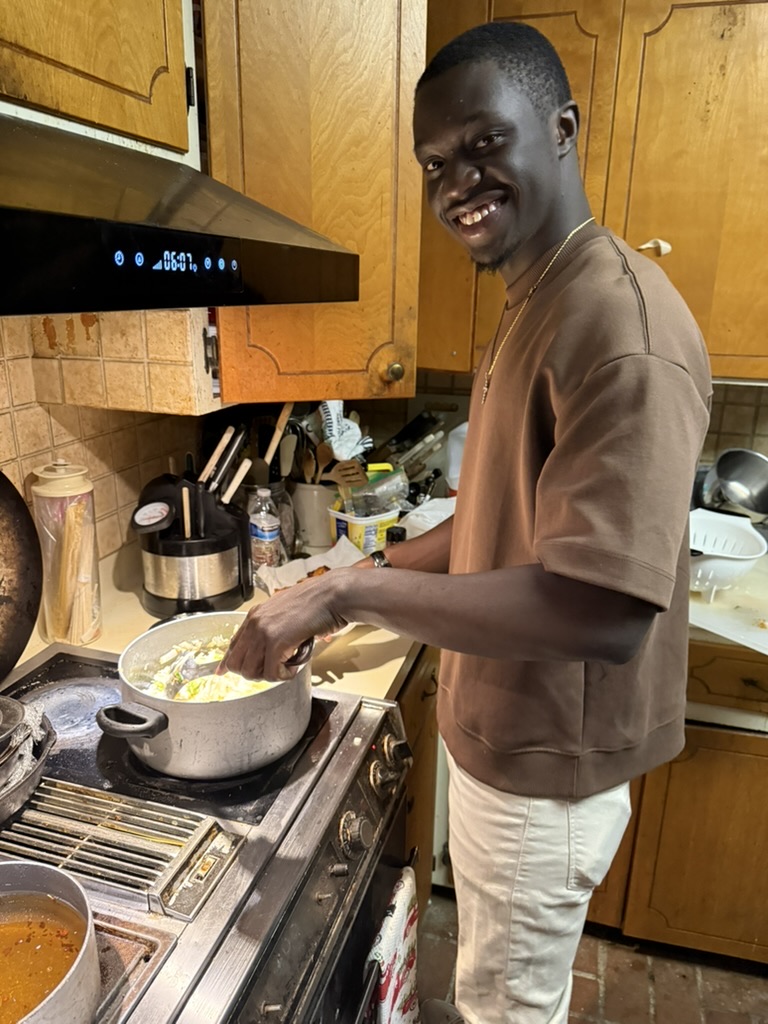
Judy’s entire family gets in the cooking act and her college-graduate son is becoming quite a good cook, too. Here he is cooking up the Fried Cabbage and Shrimp dish. He has developed his own spice combination; making the dish his own.
Cooking the plantains was so simple. I am glad that Judy came over and taught me how a Liberian cook prepares them. It certainly is an authentic recipe and dish. Our dinner meal was an impromptu adventure; Judy was a good sport as we’ve always planned to get together. Next up, I hope to learn how to make the Liberian dish, Fufu, which is all the rage here.
We had a great time. Enjoy this recipe.
Judy's Liberian Fried Plantains
Ingredients:
- peanut oil or vegetable oil, for frying
- 3 yellow, ripe plantains
Method and Steps:
- Add several inches of peanut oil (or vegetable oil) to a medium-sized, heavy pot and heat over medium-high heat to 350 degrees.
- Meanwhile, peel plantains. Slice on the diagonal making 1/2″ thick slices.
- Add a test slice to oil. If oil sizzles, it is hot enough. (It should be 350 degrees F.) In batches, add plantain slices and fry. Fry for two minutes on the first side. Flip over and continue to fry. When slices become soft and begin to brown, transfer to paper-lined plate.
- Serve warm.
Post-script: The carvings are some which my parents brought back from Liberia years ago when they served as Fulbright scholars in the country. They were purchased from a roadside peddler. I consider these carvings to be quite a treasure!


Judy sounds like my kinda people! I’m glad she mentioned about grocery store plantains not having consistent quality. I’ve tried to cook them before and never could figure out what I was doing wrong. I’ll stick to shopping for them in more authentic places!
We enjoy getting tohether with this family — and have watched their 4 children grow up. Amazing how time flies. Hope to do some more cooking with them.