Classic Chicken and Sausage Gumbo — A Second Helping — Cooking Gumbo 101
 Maylee at Beyond Gumbo
10 min read
Maylee at Beyond Gumbo
10 min read

Am I the only person who purchases a rotisserie chicken for supper; but actually is more excited about making a tasty and savory soup stock with the leftover meat and the bones? A rotisserie chicken definitely makes an easy supper meal which we enjoy from time to time. And, I’ve discovered that the chicken also makes the best homemade stock for cooking soups and stews. This stock is so simple to make; let’s not skip it. Usually, I have recipes in mind for using the richly flavored, homemade stock. One of my favorite ideas is cooking a tasty “Chicken and Sausage Gumbo.” My gumbo is superb — yes, I’ll brag. It will easily rival any restaurant or chef’s gumbo. My gumbo has lots of flavor from all the vegetable seasonings which goes into the pot. Plus, flavor comes from the dark, aromatic roux, slices of mild sausage and the savory stock plus pieces of chicken. Making homemade gumbo is a “process;” there are multiple steps involved and they all take time (with the exception of using a rotisserie chicken). But, making homemade gumbo “from scratch” is worth the effort. I wrote an “essay” about making my gumbo 12 years in one of my first blog posts. My recipe basically hasn’t changed over the years. I decided it was time to simplify and update my process — and add some photos.

What is Gumbo?
“Gumbo” is a thick, flavorful stew found in Cajun/Creole cuisine. However, it is thinner than a stew — many gumbo recipes are quite thin. Gumbo represents a melting pot of cultures found in South Louisiana: French cuisine (roux, trinity of vegetable seasonings), West African (okra, rice), Choctow Indian (filé powder), Spanish (spices, peppers), Spanish, Caribbean (seafood), German (andouille sausage). Creole gumbo traditionally contains tomatoes while Cajun gumbo does not have tomatoes. It is almost always served with rice — although one area of Louisiana serves gumbo over potato salad! The origin of the name, “gumbo,” is unclear, but may come from the West African language where gombo means okra. There are as many variations to “gumbo” as there are cooks; everybody has their own recipe.

My gumbo has a dark roux which gives a golden brown color. The roux and okra slightly thicken the gumbo. My okra is cooked and smashed — no pieces of okra in my gumbo, so you don’t even know it is their. I like to add mild, skinless beef sausage for a little flavor “zip.” Of course, flavorful chicken stock is essential for a great gumbo as well as plenty of vegetable seasonings.
Main ingredients in my gumbo recipe
Making gumbo is a “process” with multiple steps. I make each “step” of the gumbo individually, then combine them in a large pot to finish the stew. Some of these steps can be made a day or two ahead of time. Then finish the gumbo on the day of cooking.
The protein in my gumbo is chicken and mild sausage. You can add many types of protein to gumbo. For example, seafood gumbo may include shrimp or crabmeat. Or gumbo may include other proteins such as rabbit or ham.
Here are the “major players” in my gumbo: The main ingredients are: finely chopped vegetables — onion, celery, bell pepper (called the “Holy Trinity” of seasonings). spices (black pepper, salt, Tabasco Pepper Sauce), okra (I do not use (filé powder in my gumbo), garlic, dark roux, smoked beef sausage, chicken pieces. Plus let’s not forget the homemade, flavorful stock (shown in the left photo).


Cooking 101: Steps in Making Gumbo:
Here we go. Let’s make gumbo.
Step One: Make the stock.
My gumbo recipe is based on using leftover rotisserie chicken to make the stock and to contribute chicken meat to the stew. Of course, it is easy to substitute commercial chicken stock, if needed, and boneless, skinless chicken thighs for the meat. However, I often make the stock ahead of time and freeze for later use in soup recipes — such as my gumbo.
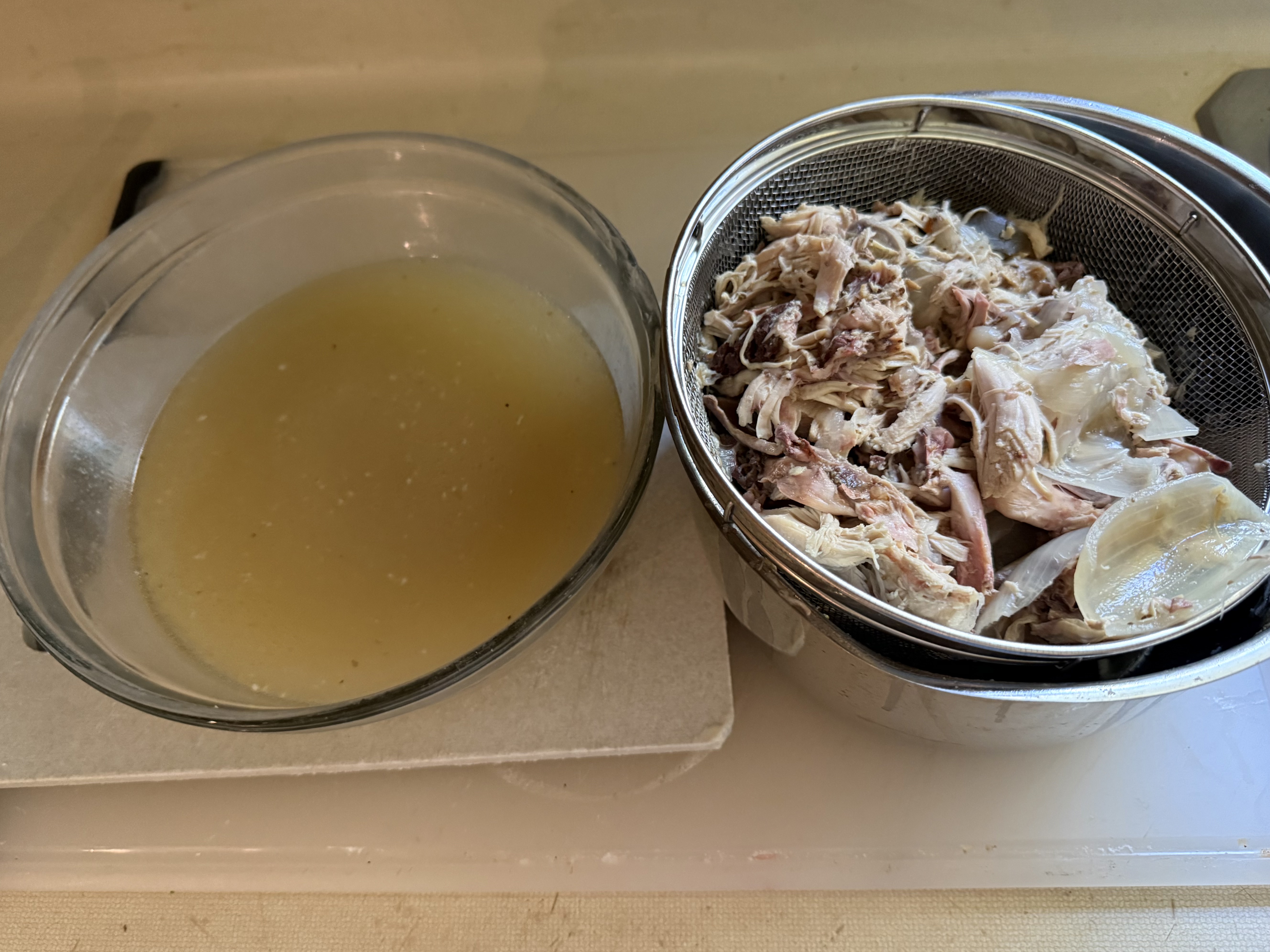
To make the stock, add the chicken carcass plus remaining meat (at least 1/2 of the chicken), a large onion and a carrot to a large pot. I also add celery seed and bay leaves. Add water to cover, and gently simmer for an hour (or less or more). I partially cover the pot with a lid. The meat will fall off the bones after an hour.


Strain off the bones and meat saving the liquid and meat. Yeah, homemade stock. Pick all the meat off the bones and cut into bite size pieces for the gumbo. You need 2 or more cups of chicken pieces for the gumbo — this amounts to 1/2 of the rotisserie chicken. No rotisserie chicken pieces? Substitute boneless, skinless chicken thighs.
Step two: Cut up the vegetable seasonings.
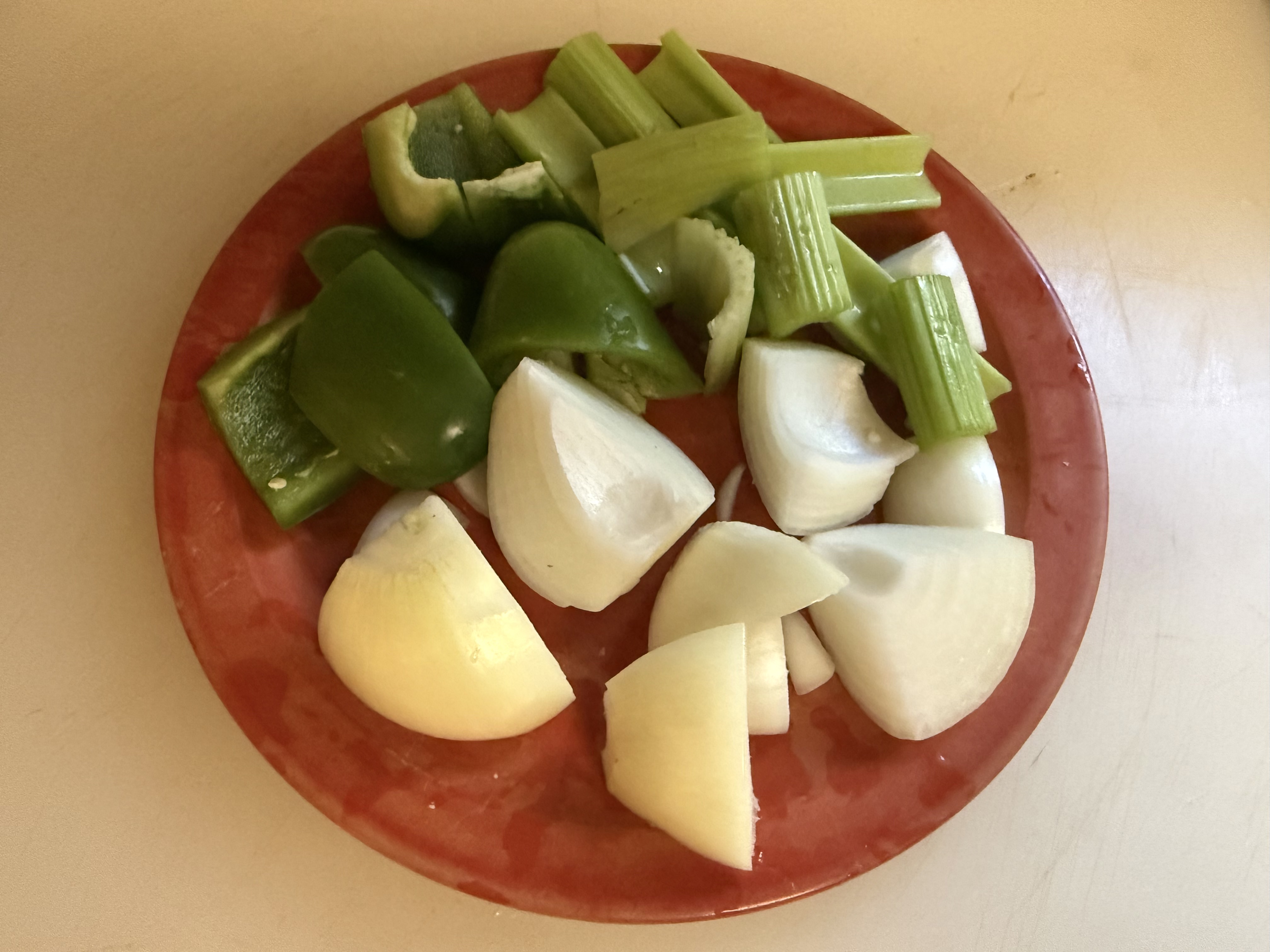
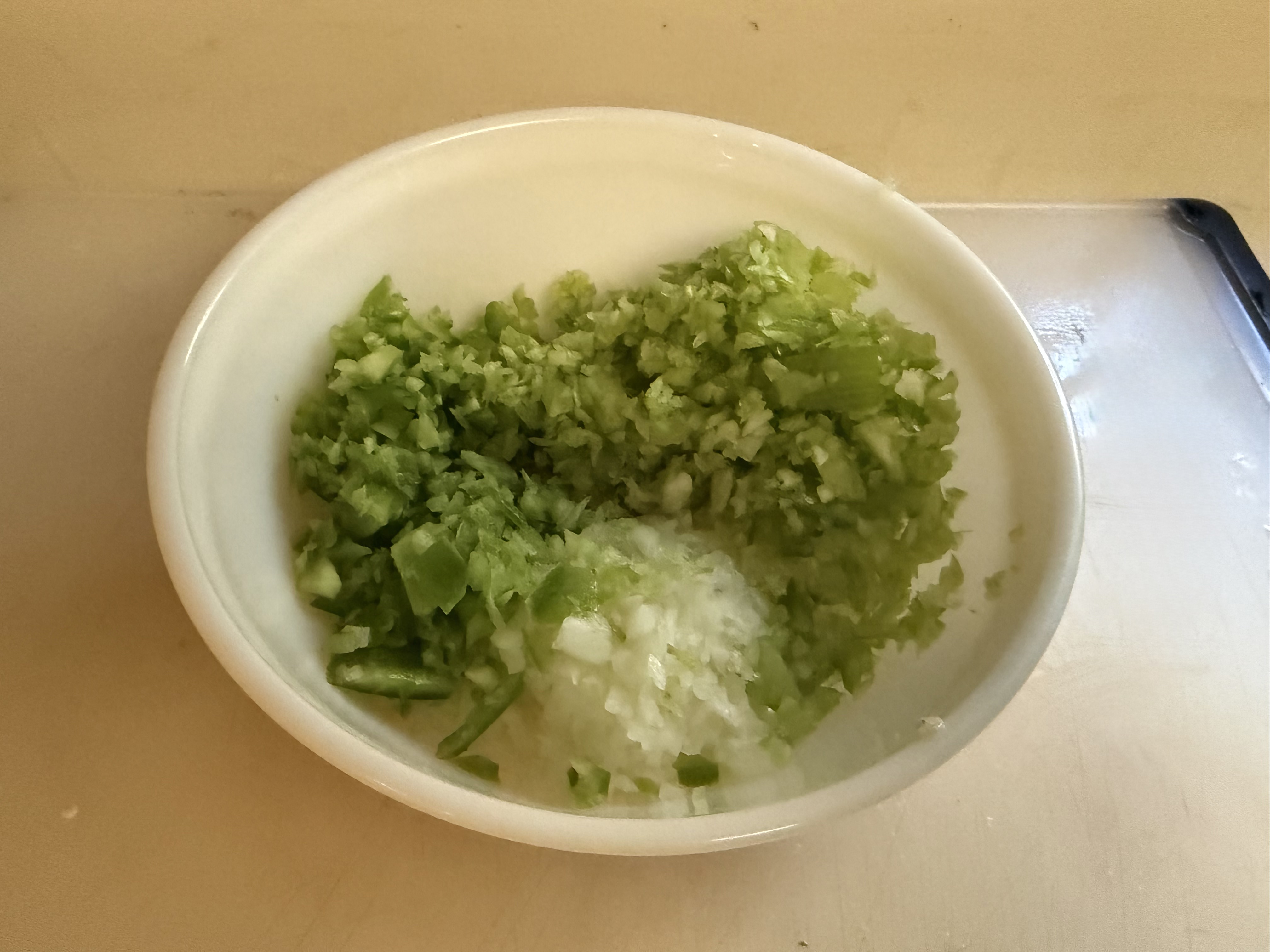
Gumbo includes generous amounts of the Cajun “Holy Trinity” of vegetables seasonings — onions, bell pepper and celery. These seasonings flavor the gumbo.
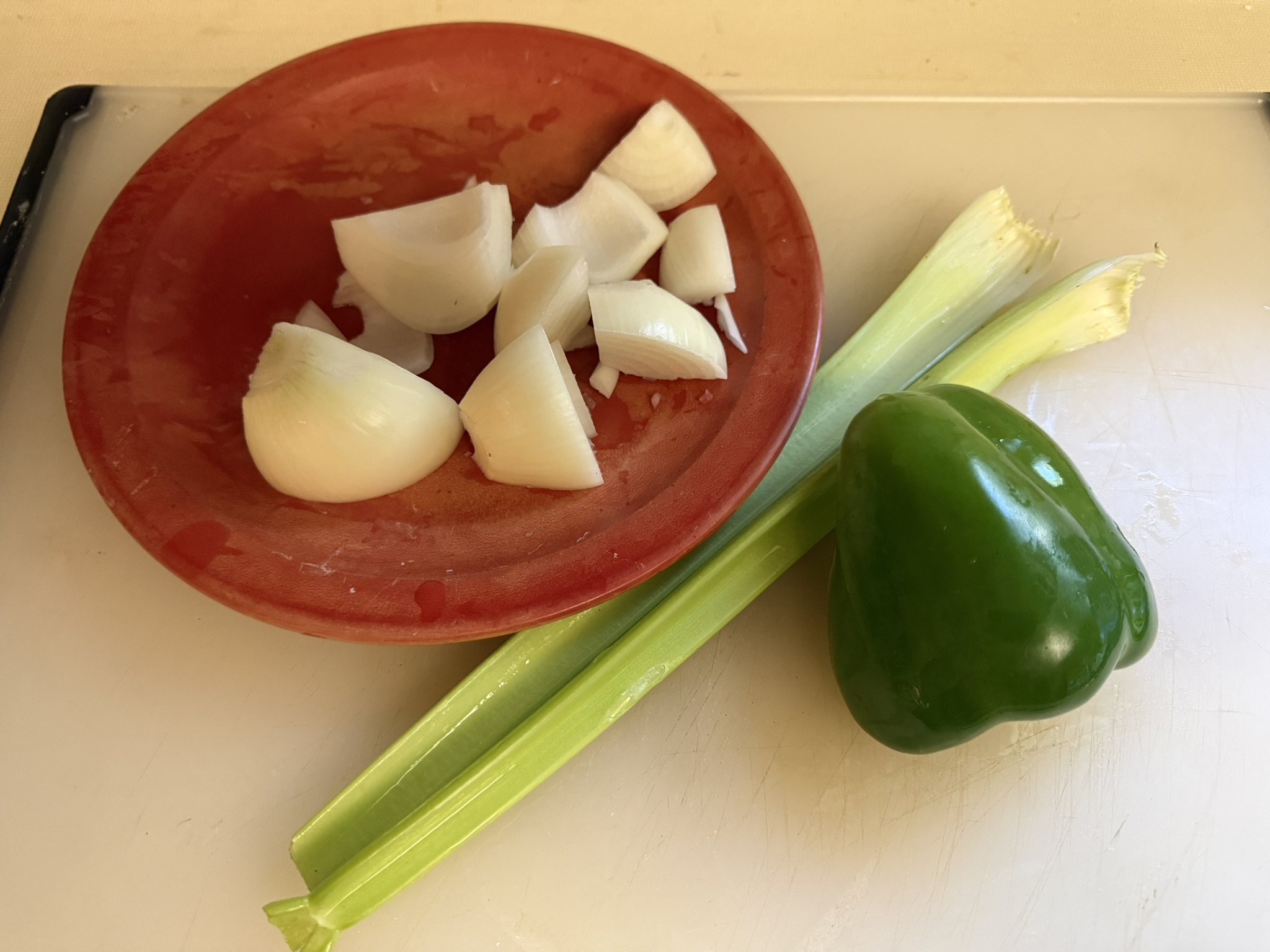
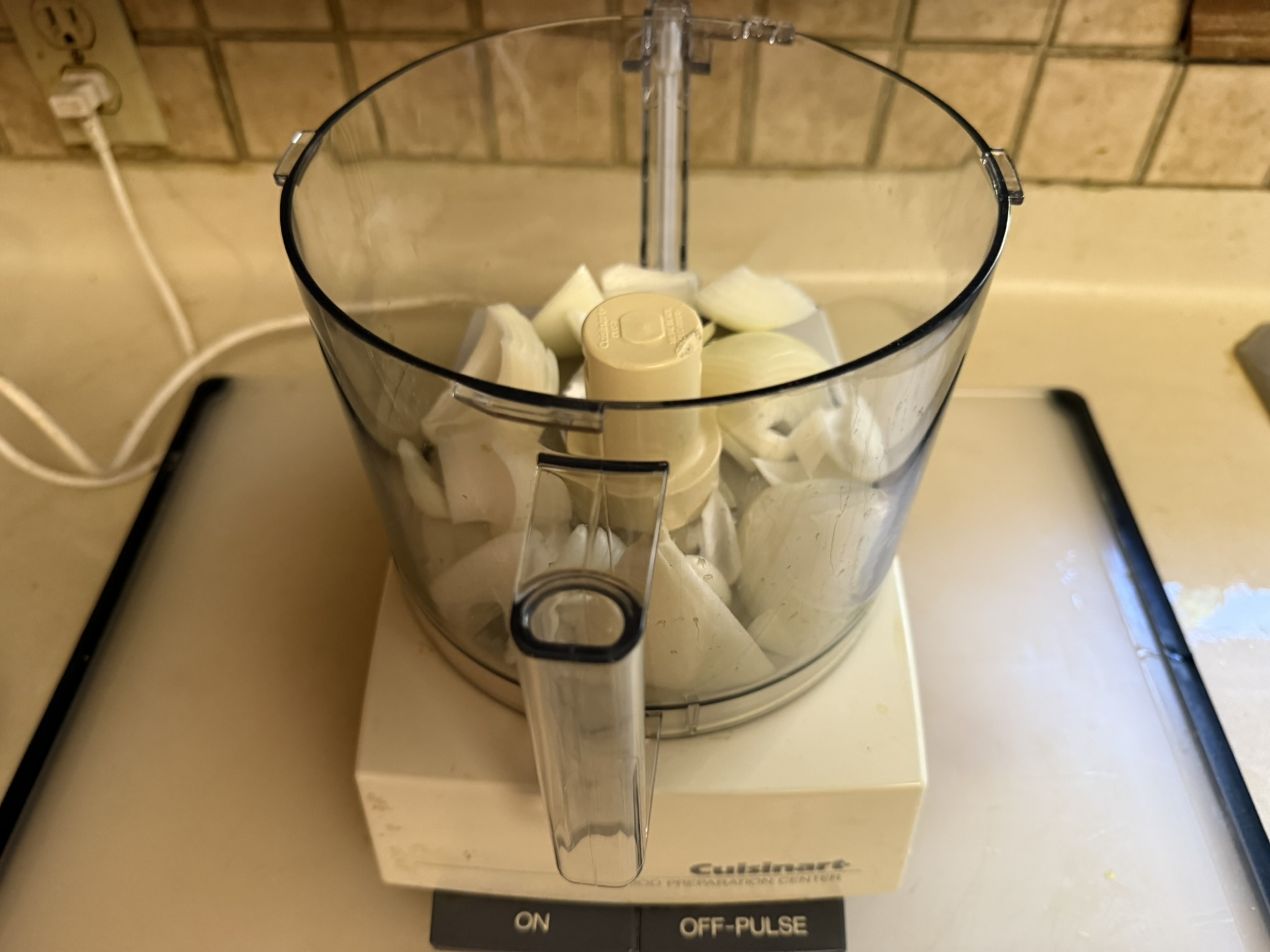
These vegetables are usually included in equal parts (however, I always seem to have more onion than celery). Take note that garlic is not part of this mixture — although I often add it, too. Since I am chopping the veg4etables to a very fine consistency (almost pureed), I use my food processor for this stip. I chop each vegetable individually. chopping the vegetables fan be done a day ahead of time, if desired.

Step 3: Make the roux.
Now we are getting into the “heart” of the gumbo. Let’s make the roux. Roux is a 1:1 combination of flour and oil which has been cooked slowly on the stove until it is a deep copper brown in color. It is not burnt — but can easily become burnt if you aren’t watching the stove. Roux contributes both flavor and thickens the gumbo. One version of gumbo uses filé powder (dried sassafras root) to thicken the gumbo. I do not care for filé powder and so I don’t use it.
Here’s my process for making roux. Add the flour and oil (equal parts) to a small, non-stick skillet. Then place the skillet on the stove and heat to medium heat until the flour/oil begins to bubble. Stir constantly to break up clumps of flour. Turn the heat down to low, continue to cook — don’t stop stirring. Gradually the flour will turn from light brown, to medium brown, to copper brown and then dark brown. Take off the stove. The roux turns from copper brown to dark brown to burnt quickly, so watch the stove carefully. Plus, the roux will continue to cook after you take it off the stove. So stop when the roux turns the color of the bottom center and right photos. If you burn the roux — start over.

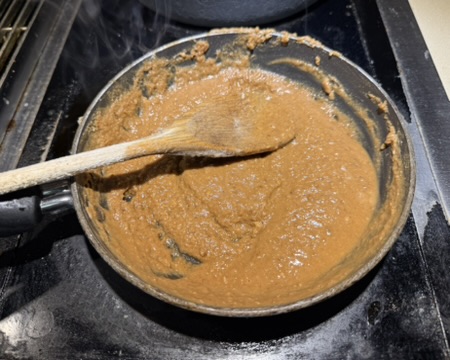


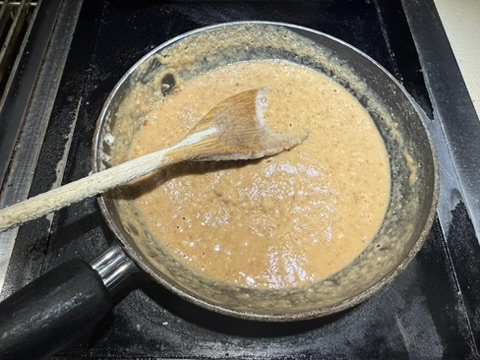

Set the roux aside until you are ready to use it.
Step four: Sear the sausage pieces.
I like to use both chicken and mild sausage in my gumbo. Mild flavored sausage gives just enough flavor “pop” to make an awesome gumbo but not overpower the mixture. My preferred type of sausage is mild skinless, all-beef sausage. Any brand will do — today I am using a local meat packer’s brand: Manda sausage. Cut the link sausage in to slices, about 1/4″ thick. Sear the sausage pieces on both sides until browned. Use either a heavy skillet, Dutch oven or large, heavy pan. It is not necessary to completely cook the sausage pieces — they just need to be seared. Remove the sausage from the skillet and set aside.


Step five: Get the chicken ready.
My recipe uses rotisserie chicken; the leftover chicken from our supper meal. Cut and pick chicken pieces off the bones — removing all bones. You need at least 2 cups of cooked, chopped chicken meat. This amounts to 1/2 rotisserie chicken. Of course, you can always use the entire chicken — this recipe is flexible.


Alternatively, if you do not have rotisserie chicken, you can substitute 1-1/2 lb boneless, skinless chicken thighs. Cut chicken thighs into large pieces. Sear on both sides in the same skillet as the one used for cooking the sausage.
Step six: Get the okra ready.
Okra serves to both thicken and flavor the gumbo. As the okra cooks, it breaks down. Once the gumbo is cooked, you won’t even know the okra has been added. Filé powder (from sassafras roots) also is used to thicken gumbo in traditional Cajun recipes. Hum, I don’t care for filé powder and never use it in my gumbo.
Getting the okra ready is easy. I use frozen okra — either whole okra or chopped okra. Just let the okra defrost, no need to cook it. As the gumbo cooks, I smash the okra against the bottom or sides of the pot to mash it thus helping the okra pieces break it down. It helps to chop the whole okra into pieces priore to adding to the vegetables. And, today I added jarred minced garlic.


Step Seven: Finishing the gumbo.
The final step is to combine all the components of the gumbo and let the stew simmer on the stove for an hour or more. Here is everything ready to go.

To finish the gumbo, sauté the vegetable seasonings in either oil or in the fat from the sausage on low heat until the onions become translucent and all the vegetables become soft. Do this either in large Dutch oven or a heavy, large pot. Don’t let the seasonings burn. Add the okra and garlic and mash the okra. Add the roux and mix in. Add the seared sausage slices, chicken and flavorful broth. You will need to add additional water to thin down the stew.

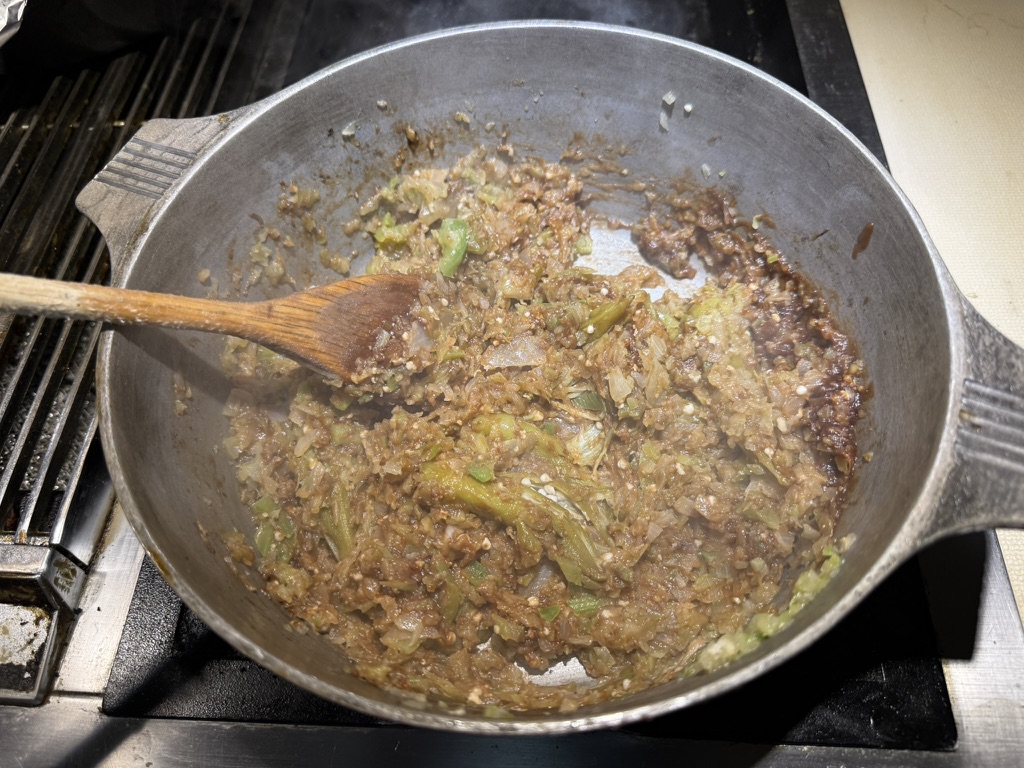


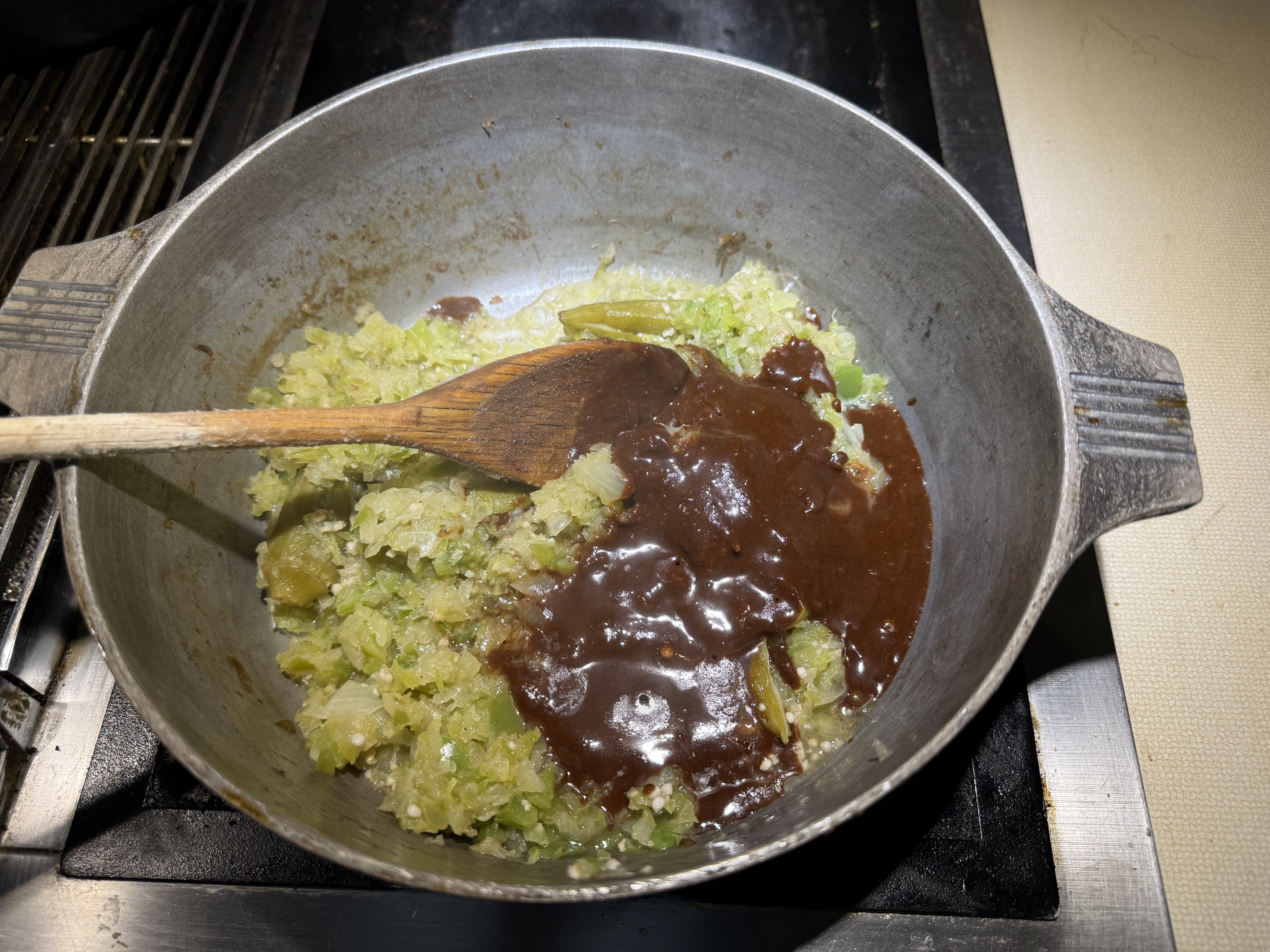

Let the gumbo simmer, partially covered for about an hour. Taste. Then season with salt, pepper and several drops of Tabasco Pepper Sauce, if desired. (Don’t get carried away with the Tabasco Pepper Sauce — a little goes a long way.
That’s it. We have gumbo! Hey, this recipe really isn’t that difficult. It just takes time to get all the components ready to add to the gumbo pot.
In Louisiana, gumbo is always served rice — and usually either crackers or French bread. That is unless you are eating gumbo in Belle Chase where you will be asked if you want potato salad added on top of your gumbo bowl.

Enjoy my tasty and flavorful gumbo recipe. I know your family and friends will love this authentic Cajun and Creole recipe. And, I have sampled gumbo from so many restaurants in Louisiana — mine is the best.
Classic Louisiana Chicken and Sausage Gumbo
Ingredients for chicken stock:
- carcass from 1 rotisserie chicken plus remaining meat
- 1 large onion, peeled and quartered
- 1 large carrot, peeled and cut into chunks
- 1 tsp celery seed
- 2 bay leaves
Ingredients for roux:
- 1/3 cup all-purpose flour
- 1/3 cup vegetable oil, such as canola oil or peanut oil
Ingredients for gumbo:
- 2 cups cooked chicken meat from 1/2 rotisserie chicken (if desired, may include 4 cups of chicken meat from the entire chicken). Alternatively, use 1-1/2 lb raw, boneless and skinless thigh meat.
- 16 oz skinless all beef sausage
- 1 – 2 Tbsp oil
- 1 large onion
- 1/2 bell pepper
- 2 stalks celery
- 1 Tbsp commercial, minced garlic
- 12-oz package frozen okra, either whole or sliced, defrosted (if using whole okra, cut into slices)
- 2 cups homemade broth from rotisserie chicken plus water to equal 32 oz total liquid (alternatively 32 oz container chicken stock)
- 1 tsp salt, optional
- 1/2 tsp black pepper, optional
- 6 drops Tabasco Pepper Sauce, optional
- cooked rice, for serving
- fresh chopped parsley, garnish, optional
- French bread slices or saltine crackers, if desired
Instructions and Steps for Homemade Broth:
- Add bones of chicken plus remaining meat to medium-sized pot along with quartered onion, carrot chunks, celery seed and bay leaves.
- Fill pot with water to cover chicken (pot should be large enough to hold 6 cups water). Bring to boil and then cover and reduce heat to simmer. Let pot simmer for an hour.
- Remove from heat, strain off bones reserving broth and meat. Pick meat off bones, cut into bite-size pieces and reserve. Reserve broth, too, which should equal 4 0t 6 cups.
Instructions and Steps for Making Roux:
- Add vegetable oil and all-purpose flour to small non-stick skillet over medium heat. Stir, breaking up clumps of flour, and cook until mixture begins to bubble.
- Turn heat down to low as flour begins to brown. Continue to cook and stir constantly until roux turns the color of a copper penny.
- If desired, cook a little longer until the roux turns dark brown. However, immediately remove from stove as soon as the roux turns dark brown — roux will continue to cook after taking it off the stove. (If the roux burns, start over.)
- Set roux aside until ready to use. May make a day ahead to time.
Instructions and Steps for Making Gumbo:
- Get the chicken pieces ready. Pick the chicken meat off the rotisserie chicken and cut into bite size pieces. You should have at least 2 cups chopped chicken. Alternative, cut raw, boneless and skinless thigh meat into bite-size pieces. Sear in oil in a skillet on medium high unto browned on both sides. No need to cook completely. Set aside.
- Slice all-beef sausage into 1/4″ pieces, brown in skillet and set aside.
- Finely chop vegetables (onion, bell pepper, celery) in food processor until finely chopped. However, don’t puree the vegetables. Process each vegetable individually, then combine.
- Saute the combined vegetables in oil in large Dutch oven or a large, heavy pot over medium-low heat. Cook until vegetables are soft and translucent about 15 minutes, add additional oil as needed so vegetables don’t burn.
- Add the minced garlic and sliced, defrosted okra and continue to cook. Mash the okra using a potato masher until the okra disintegrates.
- Add the prepared roux and stir to mix in.
- Add 2 cups of the chicken stock and stir to mix into the roux mixture in the pot.
- Add the chopped, cooked chicken pieces and seared sausage slices and stir to combine.
- Stir in an additional 1-1/2 quart water (or chicken stock, if using commercial stock).
- Bring to a boil. Then reduce heat to low. Partially cover, simmer for an 1 hour.
- Taste and adjust seasonings. Add additional salt, black pepper and several drops of Tabasco Pepper Sauce, if needed. (Go slow with Tabasco Pepper Sauce, only a few drops are needed.)
- Ladle in individual soup bowls. Top with cooked rice.
- Garnish with fresh parsley sprig, if desired.
- Serve with French bread or crackers.


Now THAT’S a gumbo! I’m glad you commented that “if you burn the roux, start over.” A restaurant in my area tried to serve a gumbo with burnt roux and that acrid flavor was the only thing the guests could taste. It was just awful. Have you ever tried the oven method of slow-cooking the roux? I’ve wanted to give it a go but I always end up doing the stovetop version as you instructed here because I love watching it change color.